
Guide · checked November 2026
How to present a clinical audit at an audit meeting
Present a clinical audit in the order of HQIP's report: why you did it, the standard, the sample and method, results against each standard with the numbers behind them, the causes you found, numbered recommendations and the proposed action plan, then ask the meeting to agree owners and a re-audit date.
What the meeting is for
HQIP's guide to documenting local audit says findings are often shared in a presentation that summarises them, but the full background and detail should be available so the validity of the findings can be understood. The findings are then reviewed and acted on by the audit lead and stakeholders.
Its best practice criteria say the results should be shared with the stakeholder group, the underlying causes of any non-compliance established, and the action plan signed off by that group. So the meeting is not just a report back: it is where the plan is agreed.
A slide structure
- Title: audit title, audit number, cycle number, lead and team.
- Why: new guidance, a possible quality problem, incidents or a previous cycle.
- The standard: each criterion quoted with its reference, target and exceptions.
- Method: population, period, how cases were found, sample size and selection, data source and who collected the data.
- Results: one slide per standard or a summary table with N, n and the percentage.
- Change since last time, if this is a re-audit.
- Observations: good practice and areas for improvement.
- Causes: what you found behind the gaps.
- Recommendations, numbered.
- Proposed action plan and re-audit date, for the meeting to agree.
Showing the numbers
HQIP recommends tables for most audit data, pie charts for proportions and bar charts for comparisons between areas, time periods or audit cycles, and says to be selective with charts. Its guide to analysing data advises against percentages when the sample is small, for example under 20.
In its note on audit posters, HQIP says failing to state the sample size is one of the most common mistakes, and that percentage compliance is meaningless without it. Explain abbreviations, because the audience will not all share your specialty.
Keep people anonymous
HQIP says individual clinicians, sites or wards should not be identified in the report: use codes such as Clinician A or Site B. If needed, individuals can be told their own code before or after the presentation. Patient identifiable data such as names, dates of birth and NHS or hospital numbers should never appear.
After the meeting
HQIP's report template asks for the date, meeting title, location and presenter to be recorded in the methodology, and for the discussion to go into the report's presentation and discussion section, which can be copied from the minutes. Posters, external talks and publications need approval under Trust policy, and particular care is needed where a small sample could make patients identifiable.
Presentation pitfalls
- Charts with no denominators.
- Naming the colleague whose cases fell short.
- Ending the meeting without owners for the actions.
Where Oriel fits
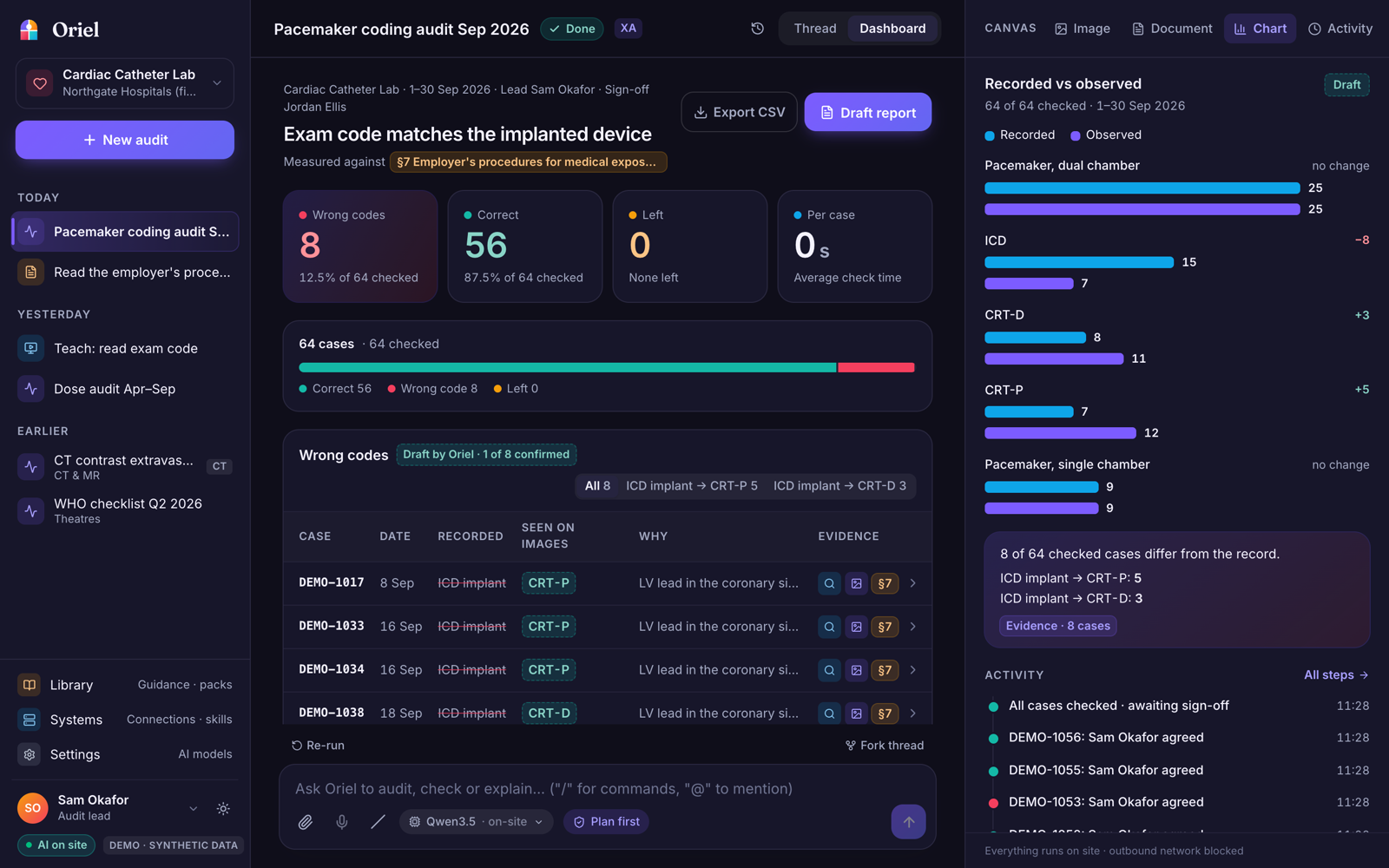
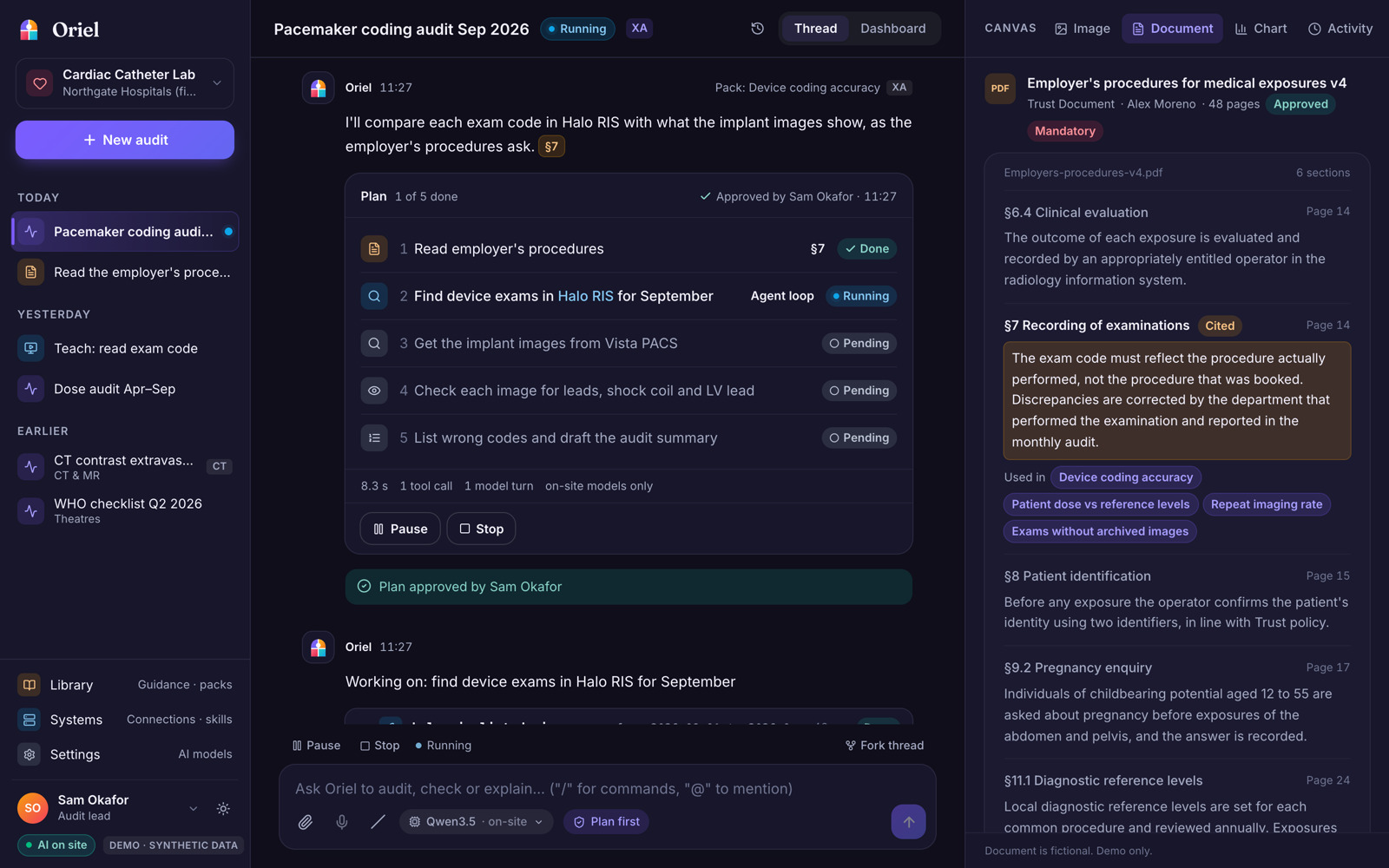
Oriel's audit dashboard shows how many cases were checked, recorded against observed results, the cases that differ and who decided each one. Its drafted report includes results tables and a grouped bar chart, with every figure taken from the audit data rather than written by a model, and exports as DOCX, PDF or Markdown.
Oriel does not make slides; you would build them from the exported report. It is a pilot shown on synthetic data only and is not a medical device.
 Oriel: On-premises AI clinical auditWatch the demo on synthetic data, then see how it works →
Questions
Should I present results by consultant or ward?
Decide the level of detail when planning the analysis, as HQIP advises, but show individuals and sites only by code.
Do I need approval to present an audit outside my trust?
Yes. HQIP says publication of an audit report in any form must be approved under Trust policy, and the audit should be registered on the clinical audit programme.
Sources
Official pages, checked November 2026. Guidance changes, so check the current version before you rely on it.
General information for healthcare managers and clinical teams, checked November 2026. It is not legal, regulatory or clinical advice; follow the current official guidance and your organisation's own policies. No patient data is used in these examples. Oriel is a working prototype shown on a fictional demo hospital with synthetic data only. It is not a medical device and is not for clinical use. It drafts and flags for people to decide; it does not diagnose or change clinical records. A clinical safety case and information-governance approval come before any use with real patient data. Oriel is a working name.