
Guide · checked November 2026
Clinical audit checklist: before you start and before you sign off
Before collecting data, check the audit is registered, has a named lead, a SMART aim, referenced standards, an agreed sample and a piloted tool signed off by stakeholders; before sign-off, check every standard has its denominator, causes are understood, the SMART action plan has owners, and there is a plan to show improvement.
Before data collection
- The topic suits audit: there is an evidence-based standard and audit is the most suitable method.
- The audit is proposed and registered under your organisation's clinical audit policy.
- There is a named clinical lead, with a senior clinician overseeing any lead who is a doctor on rotation.
- The improvement aim is clear and the objectives are SMART.
- Standards are based on the best available evidence, fully referenced, with targets and exceptions defined.
- The population, inclusion and exclusion criteria, sample size and selection method are set, with the reasons written down.
- The data set is limited to what is needed to measure compliance.
- The data collection tool is validated or piloted, with a written protocol if there are several collectors.
- Any electronic extraction has been tested to confirm the right source and the right sample.
- Information governance is agreed: data sources, early anonymisation, and IG or Caldicott advice where needed.
- The clinical team has been told, and a stakeholder group includes the people who will act on the findings.
- Stakeholders have signed off the aim, objectives, standards and method, or the senior clinician leading the project has authorised collection.
Before the report is signed off
- Every standard is reported with N (or n), the number and the percentage, with exceptions explained.
- No patient, clinician, ward or site can be identified; codes such as Clinician A are used.
- Any change to the method during collection is explained alongside the results.
- Results have been shared with the stakeholder group and the discussion recorded.
- The underlying causes of non-compliance have been established.
- Recommendations are numbered and mirrored in a SMART action plan with named owners and dates.
- The action plan is signed off under local governance: at least the clinical lead and stakeholders, and senior management or the Board where the actions need it.
- There is a plan to show improvement (re-audit, a PDSA summary or annotated run charts), with a date.
- The method is written so someone new could repeat it, and learning points are recorded.
- Any publication is approved under Trust policy, and the full report is kept for at least five years.
Using the checklist
These points come from HQIP's Best practice in clinical audit (2020), its guide to documenting local audit and its data quality guide. HQIP asks for its criteria to be applied proportionately: a small single-ward audit needs a smaller stakeholder group than a trust-wide one, but the key is that anyone who may act on the findings is involved from the start.
Keep the completed checklist with the audit record. It shows the audit team and any reviewer that the method was settled before the data came in.
Common sign-off gaps
- A percentage without the number of cases behind it.
- Actions owned by "the team" rather than a named person.
- Re-audit "to be arranged", with no date or owner.
Where Oriel fits
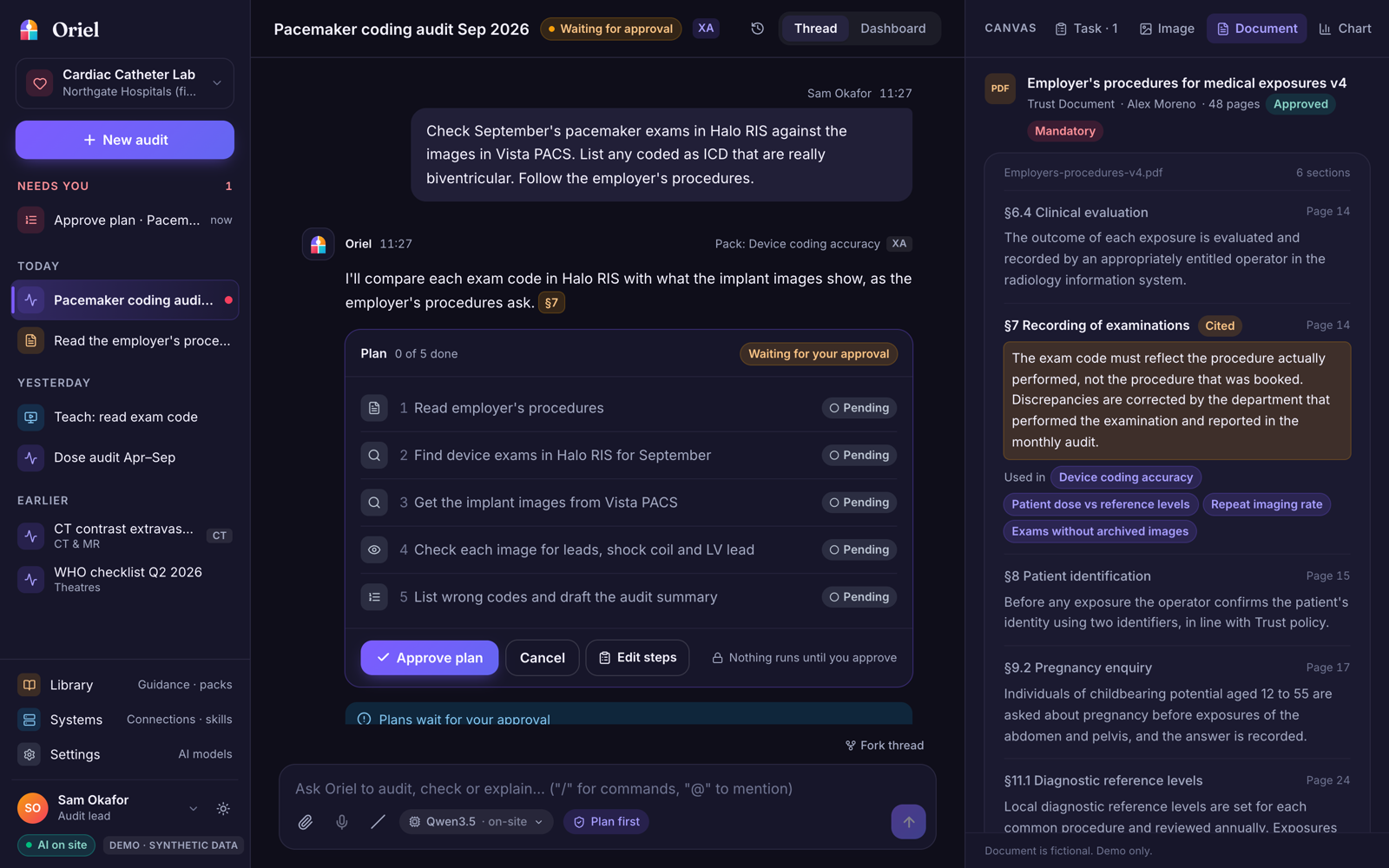
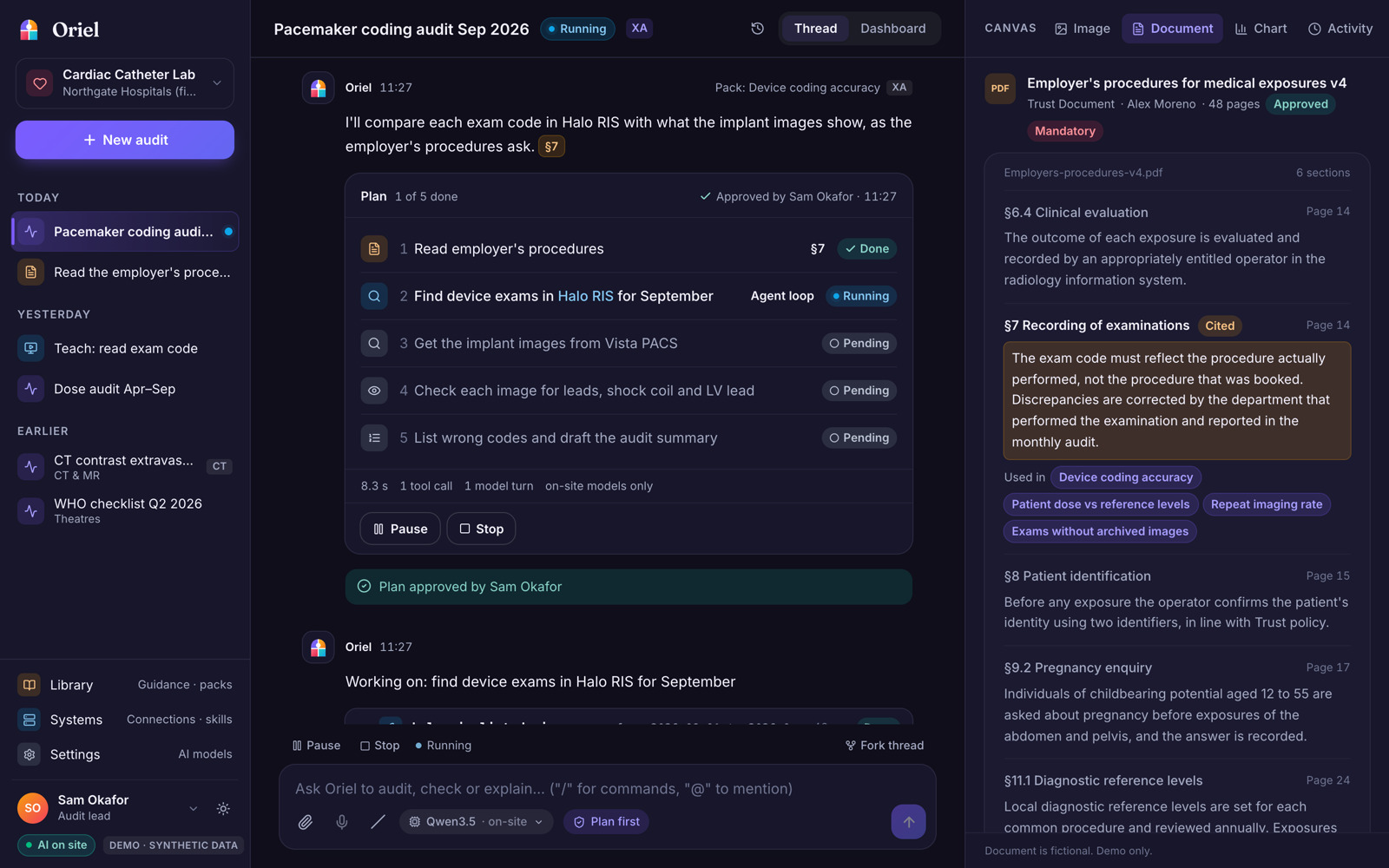
Oriel builds several of these checks into its flow. The plan is shown for approval before anything runs and can be paused, stopped or forked; unclear cases wait for a person instead of being forced into yes or no; report sections can each be marked reviewed; and a manager or audit lead finalises the report, which locks it and attaches it to the audit.
It does not replace your organisation's registration or sign-off policy. Oriel is a pilot shown on synthetic data only and is not a medical device.
 Oriel: On-premises AI clinical auditWatch the demo on synthetic data, then see how it works →
Questions
Who signs off a clinical audit?
In HQIP's guidance, registration is approved by the clinical lead and clinical audit manager, the protocol by the clinical lead and stakeholders, and the action plan by the clinical lead and stakeholders, with senior management or the Board where actions need it.
Can data collection start before stakeholder sign-off?
HQIP says only on the authorisation of the senior clinician leading the project.
Sources
Official pages, checked November 2026. Guidance changes, so check the current version before you rely on it.
General information for healthcare managers and clinical teams, checked November 2026. It is not legal, regulatory or clinical advice; follow the current official guidance and your organisation's own policies. No patient data is used in these examples. Oriel is a working prototype shown on a fictional demo hospital with synthetic data only. It is not a medical device and is not for clinical use. It drafts and flags for people to decide; it does not diagnose or change clinical records. A clinical safety case and information-governance approval come before any use with real patient data. Oriel is a working name.