
Guide · checked November 2026
Registering a clinical audit with your trust's audit team
Register a clinical audit with your organisation's clinical audit team before you collect any data: HQIP says audits should follow local policy on proposing, registering, undertaking and reporting, and the registration form should give the title, audit lead and standards, approved by the clinical lead and clinical audit manager.
Why registration exists
HQIP's guide to documenting local audit lists what documentation is for: registering the project in the trust's clinical audit programme, getting agreement from the clinical team, letting the method be reviewed, preventing duplication by letting other services reuse the design, monitoring progress, keeping a permanent record and giving assurance to the Board.
HQIP's best practice criteria say registration and monitoring should make sure senior clinicians and managers know about the project, and that all staff should know and follow the local policy on proposing, registering, undertaking and reporting audits. Its guide to improvement methods adds that a central register of audits is helpful for monitoring and for approving audit designs and proformas with in-house expertise.
What the form usually asks
HQIP names the title, the audit lead and the standards. Most forms also ask for the items that later appear in the report:
- Title, specialty and site.
- Audit lead and supervisor.
- Reason for the audit.
- Aim and SMART objectives.
- Standards, with full references and targets.
- Population, period and data sources.
- Team members and stakeholders.
- Information governance arrangements.
- Confirmation that the project is audit rather than service evaluation or research.
- Expected dates for data collection and reporting.
From registration to protocol
HQIP says a full audit protocol should then be developed from the registration form, covering the sample and how it is identified, the data collection process and an analysis plan, and approved by the clinical lead and stakeholders under Trust policy.
Wherever possible, the stakeholder group should sign off the aim, objectives, standards and method before data collection begins. HQIP says collecting data without that sign-off should happen only on the authorisation of the senior clinician leading the project.
What registration makes possible
A registered audit is part of the trust's programme, so its progress and actions are reported to the relevant committees and it can be counted in the trust's annual audit report and quality account. HQIP also says every audit carried out in the trust should be registered and approved under the clinical audit policy before results are publicised, and that publication in any form, including posters, must be approved under Trust policy.
What registration is not
- Not ethics approval: in the HRA's framework audit does not need NHS Research Ethics Committee review, but local governance still applies.
- Not the end of governance: the protocol, action plan and report go back through the same route.
- Not optional for posters: HQIP expects audits to be registered before results are publicised.
Where Oriel fits
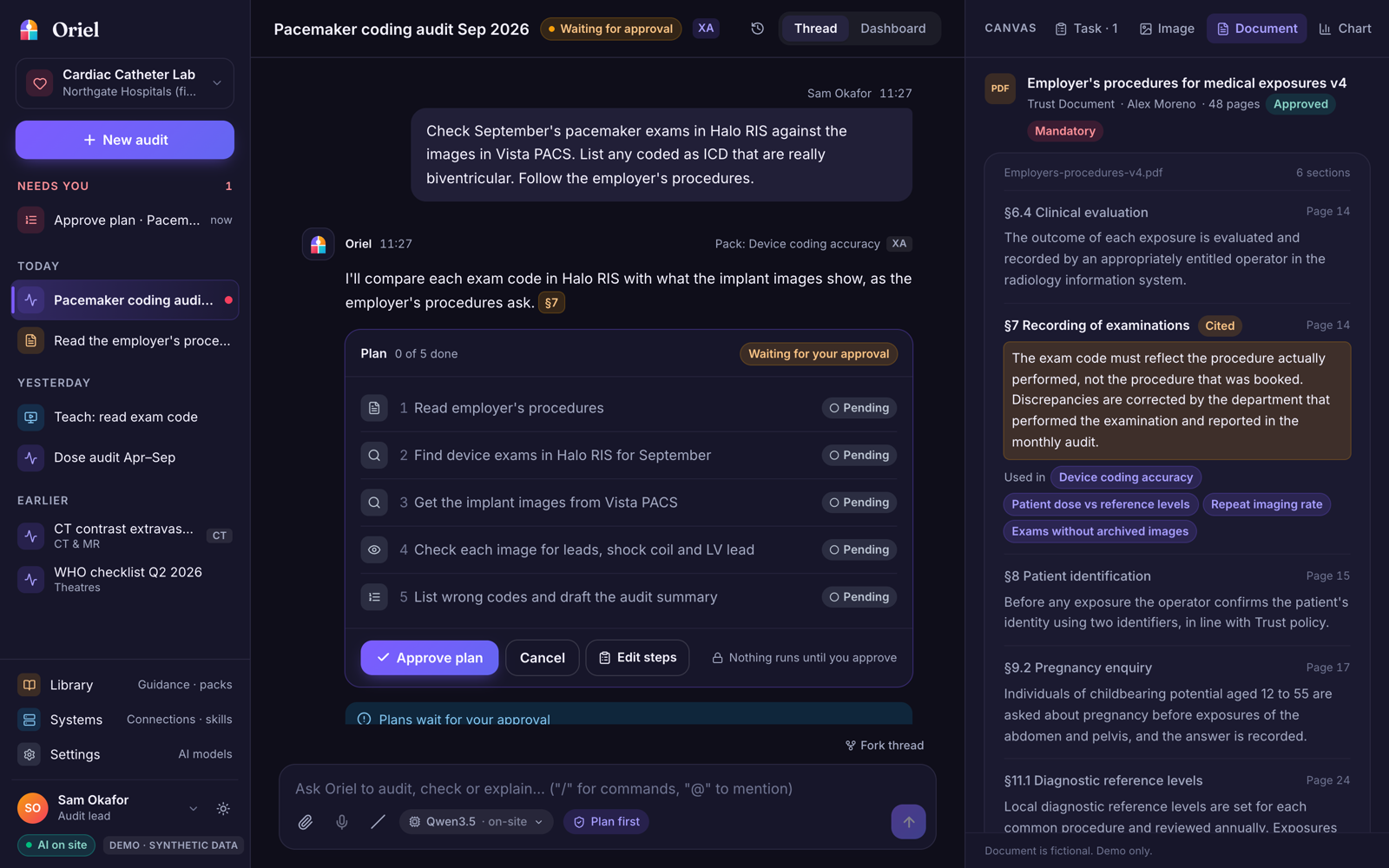
Oriel does not replace your trust's audit register. It keeps its own governance trail: audit packs are approved by governance before use, each run starts with a plan a person approves, and roles separate who decides findings, who signs off and who approves guidance. The append-only action log records who did what and when.
Oriel is a pilot shown on synthetic data only and is not a medical device.
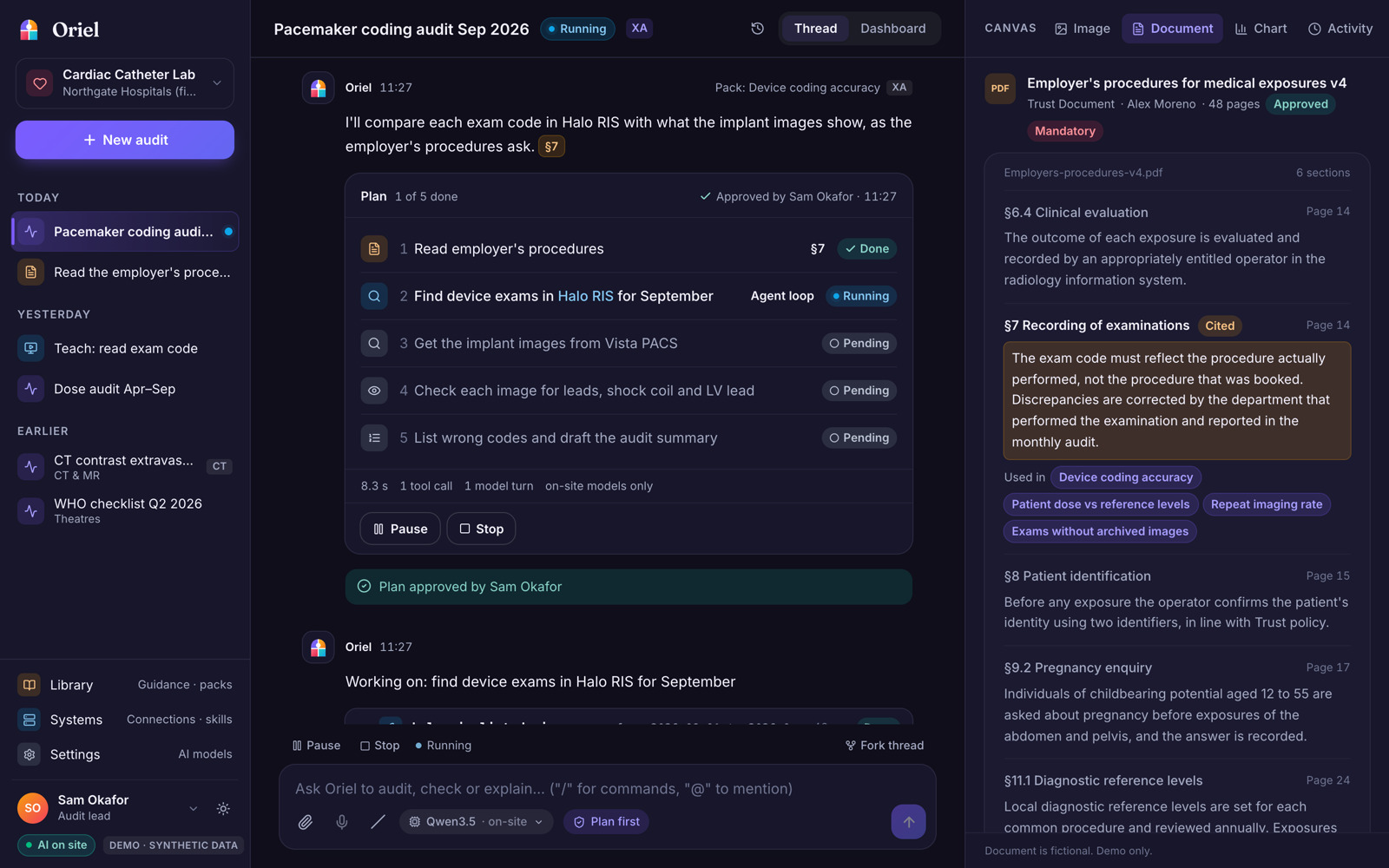 Oriel: On-premises AI clinical auditWatch the demo on synthetic data, then see how it works →
Questions
Do I need to register a small audit?
HQIP says all clinical audits carried out in a trust should be registered on the clinical audit programme, following local policy.
Who approves an audit registration?
In HQIP's guidance, the clinical lead and the clinical audit manager.
Does registration mean my project is not research?
No. Use the HRA's decision tool to check, and ask your research office if the project allocates people to an intervention.
Sources
Official pages, checked November 2026. Guidance changes, so check the current version before you rely on it.
General information for healthcare managers and clinical teams, checked November 2026. It is not legal, regulatory or clinical advice; follow the current official guidance and your organisation's own policies. No patient data is used in these examples. Oriel is a working prototype shown on a fictional demo hospital with synthetic data only. It is not a medical device and is not for clinical use. It drafts and flags for people to decide; it does not diagnose or change clinical records. A clinical safety case and information-governance approval come before any use with real patient data. Oriel is a working name.