
Guide · checked November 2026
The seven pillars of clinical governance, and where audit fits
Clinical governance is the framework through which NHS organisations are accountable for continuously improving the quality of their services; it is usually taught as seven pillars (clinical effectiveness and research, audit, risk management, patient and public involvement, staffing, education and training, and information), with clinical audit as the pillar that measures care against standards.
Where the term comes from
HealthKnowledge dates the first UK use of the term to 1999 and the NHS Executive circular Clinical governance in the new NHS. The definition it quotes describes a framework through which NHS organisations are accountable for continuously improving the quality of their services and safeguarding high standards of care.
The same page says clinical governance has to be supported by clear national quality standards, lifelong learning, professional self-regulation and effective monitoring.
The seven pillars
The pillars are a teaching framework, not a list set out in law or regulation, and published versions differ: some add patient safety or leadership, others merge items. The version most often used is:
- Clinical effectiveness and research: care based on the best evidence, with guidance such as NICE's put into practice.
- Clinical audit: measuring care against standards and acting on the gaps.
- Risk management: reporting incidents and near misses and learning from them.
- Patient and public involvement: patients' views shaping services, including audit.
- Staffing and staff management: recruiting, supporting and managing the workforce.
- Education and training: continuing professional development for all staff.
- Using information and IT: accurate records and data to plan and check care.
What the regulator requires
Regulation 17 of the Health and Social Care Act 2008 (Regulated Activities) Regulations 2014, on good governance, requires providers to have systems or processes to assess, monitor and improve the quality and safety of their services, and to assess, monitor and mitigate risks.
CQC's guidance on Regulation 17 says providers must have effective governance, including assurance and auditing systems or processes, and gives regular audits of the service as an example. It says providers must keep evaluating and improving their governance and auditing practice, and lists audits, reviews and action plans among the records of how services are managed.
Where clinical audit sits
HQIP's Best practice in clinical audit (2020) says audit works best as part of a planned programme of quality improvement approved by the Board, that the Board should set aside time to review the programme and its outcomes, and that an annual audit report should be linked, where appropriate, to the trust's quality account.
It also warns that audit findings may feed the Board Assurance Framework, but full assurance only comes once the improvement aims of the project have been achieved. An audit that finds a gap and closes it is governance working.
Common misreadings
- There is no single official list of pillars; check which version your trust uses.
- Governance is not paperwork for its own sake: CQC asks for systems that drive improvement.
- An audit showing non-compliance is not a failure of governance, provided action follows.
Where Oriel fits
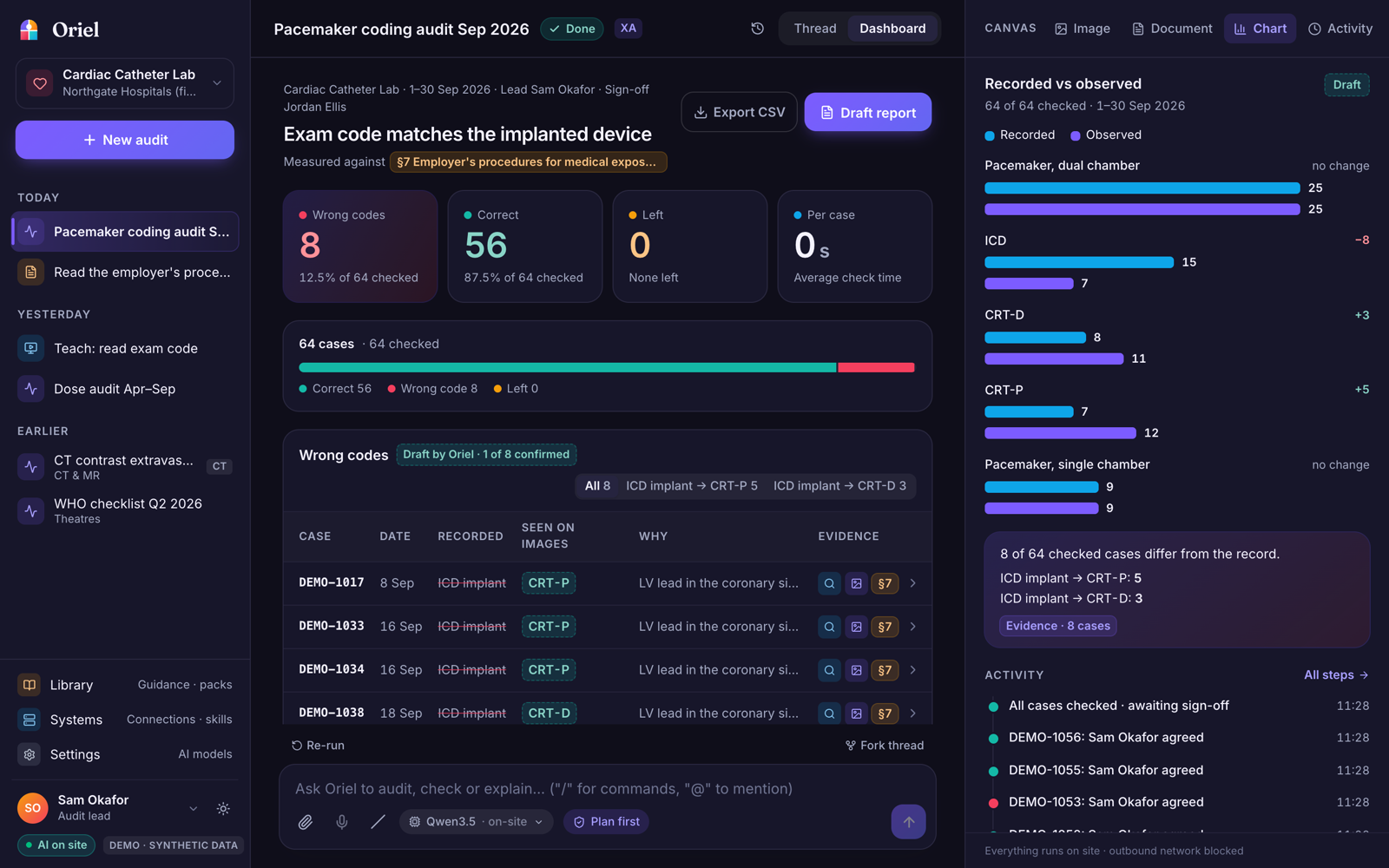
Oriel sits in the audit pillar and supports the information one. Every finding carries its evidence and the name of the person who decided it, actions are kept in an append-only, hash-chained log, and roles separate who decides findings (audit leads and reviewers), who signs off (managers) and who approves guidance (governance).
Oriel is not an incident, risk register or training system. It is a pilot shown on synthetic data only and is not a medical device.
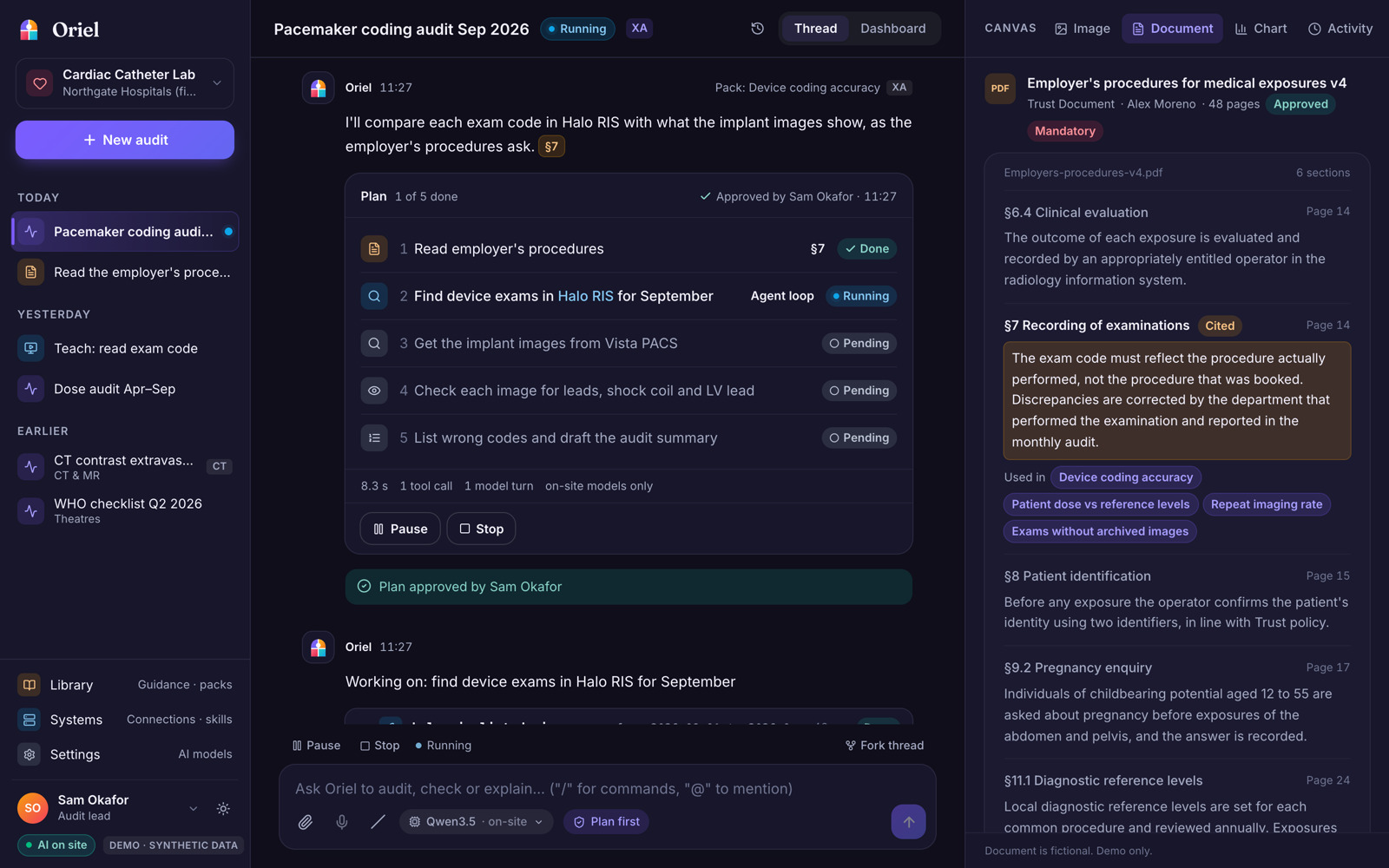 Oriel: On-premises AI clinical auditWatch the demo on synthetic data, then see how it works →
Questions
What are the 7 pillars of clinical governance?
Most often: clinical effectiveness and research, clinical audit, risk management, patient and public involvement, staffing and staff management, education and training, and using information and IT. Versions differ.
Is clinical governance a legal requirement?
The term comes from NHS policy, but providers registered with CQC must meet Regulation 17 on good governance, which requires systems to assess, monitor and improve quality and safety.
How does clinical audit support clinical governance?
It measures care against agreed standards, shows the Board where practice falls short, and provides evidence that changes worked.
Sources
Official pages, checked November 2026. Guidance changes, so check the current version before you rely on it.
General information for healthcare managers and clinical teams, checked November 2026. It is not legal, regulatory or clinical advice; follow the current official guidance and your organisation's own policies. No patient data is used in these examples. Oriel is a working prototype shown on a fictional demo hospital with synthetic data only. It is not a medical device and is not for clinical use. It drafts and flags for people to decide; it does not diagnose or change clinical records. A clinical safety case and information-governance approval come before any use with real patient data. Oriel is a working name.